
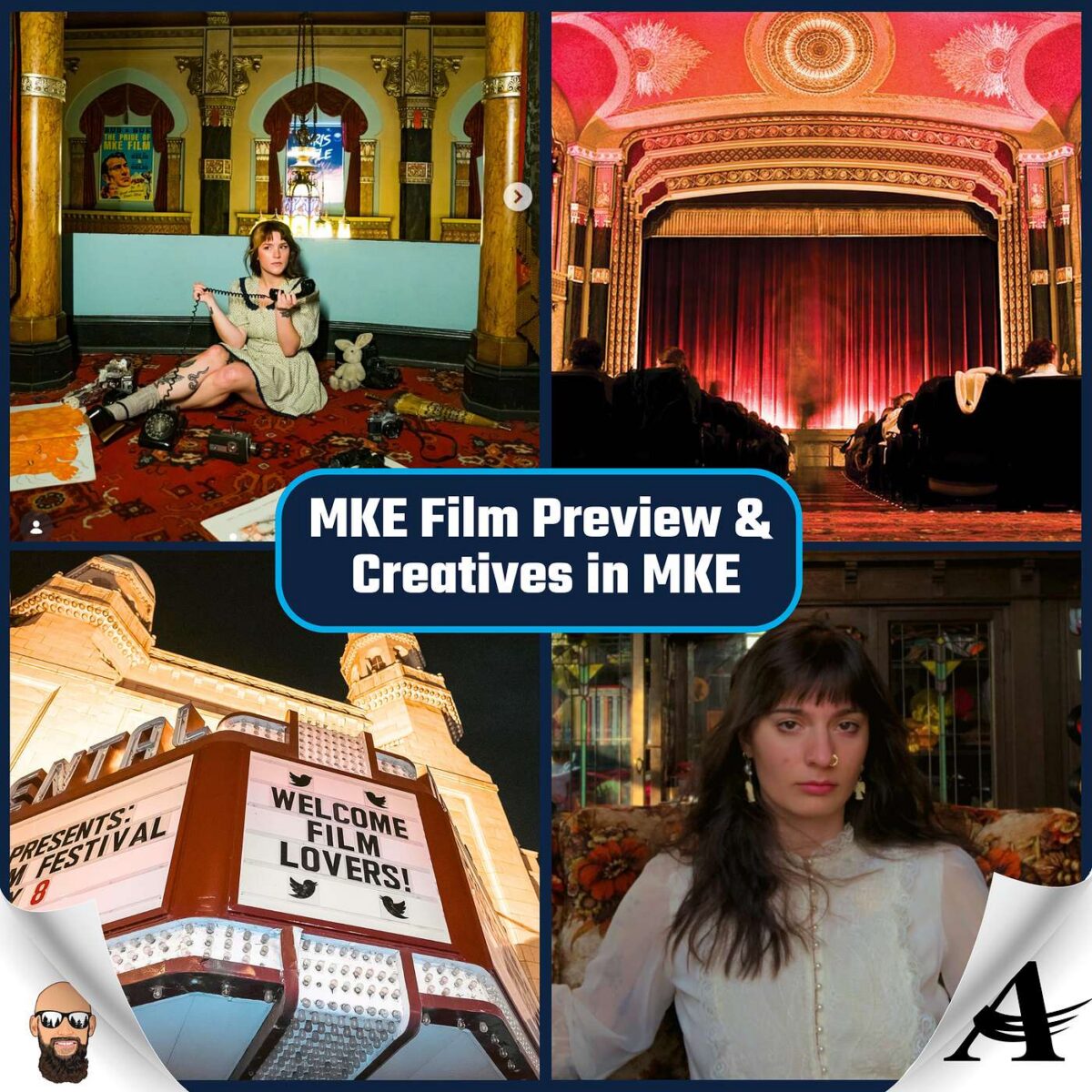
The Milwaukee Film Festival kicks off its 18th year next week! What’s on tap this year and how did it start? We also dive inside the Milwaukee film and creative scene:
- Backstory of the MKE Film Festival
- Is the Milwaukee film community slept on?
- Wisconsin is the lowest state for arts funding
- Craziest set experience
- Working on Top Chef
- Best places to film
- Why Milwaukee?
- Favorite moments
SPEAKER_03
0:04
Hey everyone, welcome back to Milwaukee Uncut. Today we're joined by Jolie Mallman and Alyssa Borkowski, two creatives and filmmakers in the area, and we're gonna be talking about the upcoming Milwaukee Film Festival, which officially kicks off next week, as well as the Milwaukee film and creative scene. By the way, I did not know Wisconsin had the worst funding for arts in the country. Um touched on that a little bit. That said, there's a lot of positive things going on as well, so we got into all that. Before diving in, I just want to thank our partners for making Milwaukee Uncut possible. We'll kick it off with Nicolai Law, the Midwest Law Firm Injured. Get Nicolet and Russ, and the team will take great care of you. Drink Wisconsin Bleed Beverage Company, best vodka brandy and canned cocktails in the game, available at bars and liquor stores across the state. And at the Drink Wisconsin Blee Pub right across from the Pfizer. And now at the corner bar in right field at Am Fam Drink Wisconsin, we just launched a bar there, which is pretty awesome. We checked it out on opening day. Also, last but not least, a big shout out to our friends over at Annex Wealth Management. If you're looking to get your finances together this year and have a goal that deals with your money, your earnings, your investments, go talk to the experts at Annex. They have an amazing team ready to listen and help with your personal goals. That is Annex Wealth Management. Know the difference. Alright, let's dive in with Jolie and Alyssa. Hey everyone, welcome back to Milwaukee Uncut. The Milwaukee Film Festival is back April 16th through 30th in its 18th year at the Downer in Oriental Theaters. I've got two local filmmakers and artists with me today who are or have been involved in the festival but are very involved in the Milwaukee film and creative scene. I've got Julie Maulman, filmmaker, content creator, writer. She is with Milwaukee Film, and the Oriental Theater runs all these social media for those accounts, and I'm sure you wear several other hats. Recent films include Sisterhood and the Cursed Tooth Coming Soon. Yes, yeah. Coming soon. And you worked on Top Chef when that was here as well, Michaela told me.
SPEAKER_00
2:22
I did. That was a fun one. That was wild. Cleaned a lot of toilets, right? But also got to like help the food offset and everything. Very fun. Very cool.
SPEAKER_03
2:31
Very cool. Thanks for coming today. We also have Alyssa Borkowski. She is a filmmaker and a painter, has a very popular Instagram account and art business. Neat, cool, fun. Just found out she was low-key famous. So we are honored to have you in here today. Um, Mandatory Bathroom Break, short film. She had a show at the festival last year, which just got released on YouTube and has been getting a very good response in the first week or so. And has a new film just found out, I'm Evil. Yes. Which is c coming out soon.
SPEAKER_01
3:06
It is coming out, it's being edited right now.
SPEAKER_03
3:08
So you you two both have a film coming out soon. Do you guys work together on any of that stuff?
SPEAKER_00
3:13
Well, they were on my set, so I w they worked on mine. Nice. Yeah. They invited me to do art on Just Found Out, I'm Evil. Uh, because I I met Alyssa last festival when I watched Mandatory Bathroom Break, and I kind of stalked her and was like, This is actually so cool. I would love to work with you.
SPEAKER_01
3:29
I also approached you and I'm like, I've been following you on Instagram, and now we get to meet. Mutual fans. Yes.
SPEAKER_03
3:35
Love it. What was it like working with each other on that stuff?
SPEAKER_01
3:39
Well, I'll say it was great. It was a wonderful. Um, Jolie was so helpful, and I was so blown away by all the work they did that I'm so excited for future endeavors.
SPEAKER_00
3:49
It was fun. It I thought it was great, and I was nervous going into it. I do art on a lot of local things, but to do like art for an artist is a little bit of pressure to feel like, oh, can I be as cool as this person? But I felt like it was a great crew and a really cool cast, um, and a really cool location that we got to film at in Milwaukee. Um, the Uplifting Mansion, which is by Marquette, um, who's they're really nice to a lot of local films.
SPEAKER_01
4:14
It's so wonderful to film there, yeah.
SPEAKER_00
4:15
Highly recommend.
SPEAKER_03
4:17
The uplifting mansion. Where is that exactly?
SPEAKER_01
4:21
It's right around Marquette High School area.
SPEAKER_03
4:23
Okay, so just west of campus a little bit. Yeah. Yeah. Kind of by the Shriner's Temple. Yeah, exactly.
SPEAKER_00
4:29
And it's a super cool building. I did a different film there in Holding that was just um in a couple festivals, and that's how I figured out it'd be a good spot.
SPEAKER_03
4:38
I'm excited. I put it on the list, favorite like low-key places to film around Milwaukee that a lot of people aren't aware of. I'm sure you film in a lot of unique, unique spots that people may not think of. So so we'll get to get to that. But anyway, let's start um with your backstories, Julie. Do you want to go first? How'd you get into this world?
SPEAKER_00
4:56
Yeah, I I started, I went to UW Oshkosh for radio TV film. Um, and then when I graduated, I was like Milwaukee's kind of the place to, at least in Wisconsin, to make film. There was so much stuff going on here. Um I moved during the pandemic, did not find a job for a while, and then finally I started working at the Oriental Theater behind the stands, just scooping popcorn because I wanted to be by movies. And then eventually I convinced them to let me do some event photography, and then I convinced them that they probably needed a digital coordinator, and I got hired for that. And since 2023, I've been doing um their social media and stuff. So it's been very fun.
SPEAKER_03
5:40
Alyssa, what about you?
SPEAKER_01
5:42
Um, I went to UWM for the film, video, animations, and other genres program, which is basically just their film program. And I met a bunch of cool people there that I'm still friends with and like still work on films together with. And I got a grant to do a film right out of graduating college, which kind of kickstarted my short film career I've had. I've made three short films since graduating, and I kinda wanna work like on something maybe long form next. So that's kind of like where my path is at.
SPEAKER_03
6:17
And uh when did you start your art business?
SPEAKER_01
6:20
Um kind of around the pandemic time when I've had a lot of time to like actually just sit down and paint for fun. Like it was always something I used to do just like on the side for like presents or like, you know, why not? But like I'm like, I have all this time on my hands, might as well create something. And like this is something I can like create just in my house without having to like to go out and like get help from people, like like you usually would with filmmaking. And yeah, just so like around that time I was really like sitting down, figuring out what I liked about painting and like improving my skill slowly, and like posting every now and then. And then eventually I think people just like started seeing it more and then like you know, reposting it more, and so it just started picking up in speed.
SPEAKER_03
7:05
Was it was Instagram the main driver of that for you? I see you have like 75-ish thousand followers on there.
SPEAKER_01
7:11
Originally it got viral on Twitter, and that made people come to Instagram, and like that's like where all my like stuff is at now. But like, you know, I still occasionally post like on various platforms.
SPEAKER_03
7:24
What was your most viral tweet? Did one just pop off out of nowhere?
SPEAKER_01
7:27
Yeah, it was like this painting of a frog I did when I was like 22, which was like almost six years ago at this point, but yeah, I think it got like over a hundred thousand likes, and people were like, This is so deep, and I love this. I relate to this, and I'm like, okay.
SPEAKER_03
7:44
How many millions of views is a hundred thousand likes? I don't know. There's gotta be a lot.
SPEAKER_01
7:49
At least there are a couple of way, way, way over that.
SPEAKER_03
7:52
There's gotta be seven.
SPEAKER_01
7:53
Maybe like one or two people saw it, and we don't we don't can't confirm. Um so humble.
SPEAKER_03
8:00
Before we get to the film festival, I wanted to talk about the uh the Milwaukee film community. Do you guys feel like it gets gets slept on at all or is is underrated? How how do you think about it?
SPEAKER_00
8:13
I think it does get slept on a little bit. Uh, because a lot of people have to or feel that they have to leave Milwaukee, go to Chicago, go elsewhere to get work. And fair, there are a lot more commercials. There's a lot, you know, there's Chicago Fire and all the Chicago shows there that are regular. But Milwaukee has a lot going on, a lot of extremely talented people in the scene that are working on uh if you want to work with Giannis, I I would say in Milwaukee, and he's on like every commercial. I know so many people who get to work with the Bucks and get to work with uh Charlie Barons, get to work with uh a lot of fun people that come in. And I think Milwaukee is very underrated. Uh I feel like you have artists like Alyssa that maybe people would not assume are in Milwaukee creating when you see neat, cool, fun, but then you're here and I'll be on set with 10 to 15 extremely talented people that all have something going on.
SPEAKER_01
9:07
Yeah, I second that it gets overlooked a lot, which is such a shame because like you have a lot of like students coming out of like a college, like UWM or like Marquette or Maya that are film like are interested in film and art. And like people who would want to stay in the city, but like they kind of like are forced to like go and see prospects elsewhere just because there's like you know, better opportunities other places, but you know, there are opportunities here.
SPEAKER_03
9:36
There are people making really cool stuff here, so Julie, can you touch on Action Wisconsin at all? Okay, I know that was that was big in the news last year and that did pass, correct? Do you think that'll change things much for the the city and the state?
SPEAKER_00
9:51
I think hugely it will.
SPEAKER_03
9:53
Uh for those who don't know, what is that?
SPEAKER_00
9:55
Action Wisconsin is they started Wisconsin's first state film office, so we have like a government representation office for film now. And other states have those already pre-existing, and so uh when you have productions come to their state, they get tax benefits and and tax cuts. Um so financially, it's a lot easier to do film in other states like California. It's a lot easier to pay people and get higher industry rates. And so because we didn't have that, when jobs would come to Milwaukee, like say Top Chef, that was before Action Wisconsin happened, you just um it was a wonderful that that was a great production, but in general, you just have a lot less protections, a lot less requirements, a lot less um expectations because you're coming somewhere that doesn't have a state film office to set that up. Um and so now more productions will be able to come because they'll get tax benefits for coming here. Um and I'm very excited. It's uh I think they just hired uh their first uh like lead executive person on it. Uh it's physically happening, they're doing a lot of stuff in the state. I'm seeing uh meetups and events all over, and I'm very excited. I think it will do good things in the state. I'm happy it actually happened.
SPEAKER_01
11:14
I'm excited to maybe see some more funding for a lot of like films around here because like funding is like very hard to come by.
SPEAKER_03
11:21
Is that hard to come by everywhere? Does Milwaukee have a more difficult time than than other cities? Or is it all relative? Like there's probably more competition in a Chicago or LA or New York. Um, I'm guessing those cities obviously get more funding.
SPEAKER_00
11:35
Wisconsin, I would have to look up the exact number, but we are one of the lowest in is in the 50 states for arts funding. So we're like at the lowest, I think we have the lowest percentage per capita of art funding. It's it's really bad. So here it's a lot of different things.
SPEAKER_03
11:50
So yes, it is very bad, even relative when you scale things comparatively. Yeah. We just don't know. Do you know why that is or how has it always been that way?
SPEAKER_01
11:59
We're just getting overlooked a lot because like Chicago, LA, New York is just seems more glamorous. I think a lot of just business gravitates towards their own.
SPEAKER_03
12:09
Well, we'll go we'll go on the uh the more positive side. Now let's talk about the film festival cut coming up. Can you let the audience know what what that is, what's happening?
SPEAKER_00
12:19
I'm super excited. I love the film festival. It's probably my favorite thing that the city does. 15 days full of films. Uh, our opening night film is a documentary about Bob Euchre, and I'm really excited about that one. I'm not like the biggest baseball person, but um I really have like a Bob Euchre bobblehead at my apartment. Um I think the Brewers opening game, they got a little preview of 20 minutes of the documentary, but the world premiere will be opening night at the festival, and I'm really excited about that one. Um, other stuff we've got a Nick Jonas movie. Um you wouldn't know. He made one. The breeze fired up about that.
SPEAKER_03
13:03
Come to the big Jonas Brothers fan right there.
SPEAKER_00
13:06
I think that's our centerpiece. Um, Paul Rudd is in it. So it's an interesting, yeah. So we get big movies like that that are um from out of state, and then things that are from Milwaukee. You is obviously very close to the uh city that we live in, but there's a ton of other international stuff. We have uh Morama, which is uh a Maori like horror film. If you like Nosferatu, I heard it's very similar. Um, and then the best thing that we do is the Milwaukee shows. Milwaukee show one and two, and then we have a music video show and a youth show for all Milwaukee filmmakers, all local people, and their work is incredible. We have that's the best time to see like the talent that we have in our state showcased, I feel is that Cream City Cinema? Yes, yeah.
SPEAKER_03
13:57
And you all have 11 Milwaukee-based films this year?
SPEAKER_00
14:03
Features. Features. There's even more shorts.
SPEAKER_03
14:06
Um, like overall, we've got so those are full, those are full length, and then you'd have stuff like you did last year listed that are shorter.
SPEAKER_00
14:14
The shorts programs are you you would come to one and then they'll play like 10 to 12 shorts all in one. So it ends up being like a feature, and then in between, because it's Milwaukee people, they'll come and do QA's, and filmmakers get to go up in between each short and tell you what they did and like how they did it.
SPEAKER_03
14:32
Very cool. Any uh any local features or shorts that you're really excited about or local filmmakers to watch that'll be involved this year?
SPEAKER_01
14:41
Yeah, I think we both were really excited about Fly Trapper. It looks like a very interesting movie, like horror and comedy.
SPEAKER_03
14:49
Interesting.
SPEAKER_00
14:50
Drew Britton, uh, I think a UWM graduate, and Georgia King did that one, and it's got like drill rap and it's like a horror comedy kind of thing. It looks really funny. Well, that can.
SPEAKER_03
15:07
Yeah, clearly. Yeah.
SPEAKER_00
15:09
We have um we have a short from Enan Wong, who was a professor at UWM previously. He um his feature film, decoupling, won an audience award at the 2023 Film Festival, and he's back with a short, and he is incredible. He educates filmmakers, and he is a really good filmmaker, so that's gonna be a good one too.
SPEAKER_01
15:30
Also, one of my former professors at UWM has a short playing in the Milwaukee 2 show, Jesse McLean, which I'm really excited to see.
SPEAKER_00
15:38
She's very like a frequenter of the festival. She's got a lot of work that comes in.
SPEAKER_03
15:42
Nice. Um, you guys are on a lot of sets. One one question I had is there any um stories that stand out or scrappiest moments that each of you have had on a on a film set before?
SPEAKER_01
15:54
Huh. I think on my last short film, um Just Found Out Was Evil, we had a scene where a person is tomato bobbing, like apple bobbing, and we're like, okay, it's a cool shot. And we now we think we want to get an underneath shot. Now, how do we do that with like 15 minutes left in the schedule? So, like, we found just like a plane of glass laying around. We're like, okay, very scrappy setup. We're putting chairs on tables on like on the ground, and like kind of, you know, a little bit uh jerry-right but you know, if people really pull through, you can make any shot happen.
SPEAKER_03
16:29
And you got the tomato bobbing shot you.
SPEAKER_01
16:32
From underneath, yes. So you had glass and then a two table, yeah, glass bullshit and then glass, and then like chairs on top of tables that were like balancing the glass, and like we had to tell the person bobbing, like, don't move that much because it's all very loosely put together. But you know, it happened. I'm thrilled about it.
SPEAKER_00
16:52
Uh, I would say I did uh the first feature film that I got to work on, Corridor, which was in the Milwaukee Film Festival, maybe 2022, 2023. Um it was a big one, and they got to film at the War Memorial Center at the uh Milwaukee Art Museum. It was very cool. And there was one day where we were filming at the home of uh a producer's relative that had passed away. So we were able to film at this home that was recently vacated. Um and we were like, oh, something's going on in the basement, something weird is going on. And we went down there and the septic tank broke, and so that was where we were keeping like all the costumes and stuff, and really quick we were like, let's just get all this stuff, and we cleared it out really quick. But that was like my first feature, and I remember like uh Zach Erdman, who was incredible, looked at me and he was like, We're this is just days over. We're we're calling it a day, and it was fun. Everybody did great, everybody handled it really well, and it was safety compliant, but it was just very funny. Yeah, we can laugh about it now. Yeah, it was a little shitty, but it was fun. It was fun.
SPEAKER_03
18:00
Yeah. Hey guys, just a fun fact before we dive back in with Julie and Alyssa. Did you know, according to a recent Schwab survey, Americans say it takes$2.3 million to be wealthy? You may have had your financial plan set on a bigger or smaller number. But if you're looking for added insights on how to get there or how to avoid some tax pitfalls along the way, our friends at Annex Wealth Management are ready to listen no matter where you're at in your financial journey. And if your situation is complex or simple, the Annex Wealth Management team can give you the wealth expertise and guidance on reaching your goals. A lot of great people over there. That is Annex Wealth Management. Know the difference. Head on over to AnnexWealth.com and let's get back to the show. Going back to the film festival, why why do you think this is so important for the city of Milwaukee?
SPEAKER_00
18:50
I feel uh one, what we talked about to show that we do have artists that are worth funding, uh huge thing. I feel it gives opportunities to filmmakers in a way that other festivals um aren't always able to because we have such a local angle that becomes uh bigger than it really is. I think a lot of people might think the Milwaukee Film Festival is kind of small. It's one of the bigger festivals. We're part of the um Film Festival Alliance. And uh I I've just uh we had a feature last year cycle that was about a cycle of violence and um a shooting situation in Milwaukee. And they come back every year and they have said Milwaukee Film Festival was like the key to getting them everywhere else because we're just the right size to promote people and send your name out there to get you bigger places, but we're big enough that if this is all you get, it's pretty good.
SPEAKER_01
19:50
Yeah, definitely inspiring to local artists. I remember I was a freshman in college and I got to volunteer at the festival and I was so excited. I mean, like, I just get to be involved. I'm this I'm thrilled. One day maybe I'll even play. And then you did.
SPEAKER_03
20:04
And you've already done that twice.
SPEAKER_01
20:06
Yeah, so it just goes to show it it brings inspiration to people that want to make films.
SPEAKER_00
20:11
Yeah, it's it's a platformer. It's it platforms a lot of people that normally I think their work wouldn't be seen. They specifically try very hard to have programs that are for um LGBTQ cinema, for Hispanic cinema, for black American filmmakers. Uh they find films that you wouldn't see and they show them to you. There's so many films I see during the festival that I'm like, I would not have watched this or searched it out if it wasn't presented to me.
SPEAKER_03
20:38
Julie, is it rare that a film festival will platform local artists or LGBTQ minorities like Milwaukee does of this size?
SPEAKER_00
20:49
I would say uh they're gonna be uh far and few between. I think uh you'll get a few of them, but it's not often that like programming is specifically looking out for those things the way I see our programmers do. I think a lot more people should get into it and try on that. But um, yeah, I think we do pretty good. I will say, what do we got? 46% of our films this year were directed by um female or non-binary directors. Which yeah, I love to see our our opening night last year um was with Christina Costantini. It was about Sally Ride. Um we just have a lot of female filmmakers that come back year after year, and it's very inspiring to see people working regularly and succeeding in the industry that way.
SPEAKER_03
21:37
Absolutely. Anything else you want to say about the film festival this year that people should be aware of?
SPEAKER_00
21:43
We have uh a friends and family night, um, which is before the I think it's I'll have to look up the date, but it's before the festival. Anyone is welcome to come. We do a preview of all of the fun uh different programming series that we do. We show trailers. And we just give you a taste of what it's going to be like for the rest of the fest. Other than that, I would say besides the films, we have panels where we invite filmmakers from out of town, bigger filmmakers, to tell you how to do it and how you can make it.
SPEAKER_03
22:17
If you've heard of hundreds of beavers before, we can just Sablejack and Kurt and those guys love. Is that an example of a film that was local and got platformed and then and then took off for they got a good cult following around that thing?
SPEAKER_00
22:31
Huge. Kurt Ravenwood, amazing person, a really nice guy. He actually I briefly met him on Corridor, but never really connected. And then hundreds of beavers came to the 2023 Film Festival. I watched it. It was incredible. They brought the beaver like mascot suits out and like attacked people in the beavers. It's the yeah, they they have a great method and I think great energy. A good case study for how to take a local film and make some genuine profit off of it and get it out there.
SPEAKER_03
23:04
How did the film festival start?
SPEAKER_00
23:07
I loosely know it, I gently know it. I know 18 years it's been around. I know it started, I believe, as something close to the Milwaukee International Film Festival, which was called MIF, and then I think it transformed into what it is today. And it's definitely gone through a lot of like rebirth and remixing throughout the years, I will say.
SPEAKER_03
23:31
Um how long have you been there for?
SPEAKER_00
23:35
Three, four years now.
SPEAKER_03
23:36
I've been you've seen a lot of change even in the three to four years. And do you want do you want to speak on what what you've observed being a part of it?
SPEAKER_00
23:44
I I would say when I started, I had no idea what Milwaukee film was because I was from out of the city and I just heard Milwaukee film. I work in film, I should probably really try and get connected with that. Um, and I started with um their education photography things. And it was really wonderful to get involved throughout the years. They've lost funding, gained funding, um, brought people in, brought people out, all to keep it alive. Because a lot of local film things die because of a lack of funding, a lack of care, a lack of volunteering. And so there were times where I was like, I'm really worried that this thing I love might not always be there. But through the people that stick around, I would say Christopher Pollard is a huge person. That's he's our membership and giving director. He goes out people to people and talks about what we do. And I think it's definitely helped us stay around. Susan Kearns recently just joined. Um, and I think she was a big uh help in. I had just I was around for what would it be called? A couple interim directors who all cared so much about film, but we were just looking for somebody solid to stick around with us and really like be in it for the long haul. And when Susan came on, um I think she last festival was her first festival. Um, she is a Columbia College Chicago professor previously in film. She had done QA's and panels with Milwaukee Film Festival before. And so when she got on, we were all super excited. And then she's done amazing stuff. She's she's connected with Action Wisconsin. She actually goes out and does things with the film community, which is maybe rare but shouldn't be. She's not just like up in an office somewhere, like talking down at us. I see her often at work, and she's in the theaters and actively trying to get filmmakers in. She was able to get us Rachel Talalay, who uh directed Freddy's Dead, Another Nightmare. Um, she's like a horror director and she's amazing. And she's just gotten so many special uh guests and filmmakers to come in that I just don't think we would have gotten without her. So definitely I think we're in like the strongest place we've been right now that I've been on the on the team. It feels like our best time so far.
SPEAKER_03
26:02
That's awesome. And how does the process all work to select films? I'm guessing people see it come together. There's these two amazing weeks, but I'm sure it's a year, year-round process to get it to this point. You said over 200?
SPEAKER_00
26:17
Yeah, we've got 245 films and then 138 shorts.
SPEAKER_03
26:21
So damn near 400.
SPEAKER_00
26:24
Yeah, it's it's a lot. We have a screening committee that's for the festival that um I think how many people apply? A lot. A lot of people thousands or of movies, definitely, thousands of movies. Uh we have a programming team, and it's not just one person that has to watch everything. Uh we have I don't think that would work.
SPEAKER_03
26:45
I don't think the math would work on that.
SPEAKER_00
26:47
It would be wild. It used to be, I think, like three or four, which even that is like I can't.
SPEAKER_03
26:51
Does sound like a fun job, but uh yeah, that is a lot.
SPEAKER_00
26:54
Yeah. We have a team of programmers, they watch everything. Um, we're all invited to join the screening committee. Um, I watch a couple shorts for uh Jack Ferrier, who's our genre career programmer and shorts programmer. But yeah, there's, I mean, they submit through film freeway, and we get thousands of submissions. So it's hundreds and hundreds of hours of film watching, and they really do watch it. Our programmers watch everything full length, they leave notes, they compare with each other, and I know for a fact it's very hard for them to turn people down, but thousands. I mean, even in terms of the Milwaukee submissions, it's like hundreds in the upwards. So it's hard to say no to people, but we get so many submissions.
SPEAKER_03
27:38
Any advice to the filmmakers out there to break through?
SPEAKER_00
27:42
I would say keep submitting. Don't stop submitting, don't be upset by a no. I I have a short film, Sisterhood, that uh played at the Madison Film Festival and a few other fests. But say you submit to like 20 places, you might get four yeses. Yeah.
SPEAKER_01
27:56
A lot of rejections.
SPEAKER_00
27:57
Just fine. Yeah, that's fine. Don't take it to heart. Keep submitting. Uh submit local places first. Think of places that you can show up because if you, you know, you can submit anywhere, but when they know that you're gonna be there in person and you can show up for your film, it's a lot more likely that you'll get booked. Yeah.
SPEAKER_03
28:15
Alyssa, how many uh how many films did you put out there before you got in to these festivals?
SPEAKER_01
28:22
And um, well, I mean, I've made two short films before this, and they both got into Milwaukee one, but lots of rejections from other places, so how how do you how do you both manage that as a artist and creative?
SPEAKER_03
28:37
And it if you're in that industry or you know, what we do here, it is it is kind of constant rejection to get that good break and then keep uh building off of that essentially.
SPEAKER_01
28:48
My thing is I'm not making these to be accepted or rejected into festivals. I'm making them because it's a passion project. I love doing it. I like it's like my favorite thing to do, basically. So that's why I'm making it. So it obviously it sucks when you don't get into a place that would have been cool to like screen at, but hey, I still made the film at the end of the day.
SPEAKER_03
29:12
Sounds like a healthy outlook. You have to have an out-healthy outlook when you're not gonna be laughing at me over there. You're yeah, but I should learn something from you.
SPEAKER_00
29:21
You gotta do it for the love of the game, otherwise it'll dry you out.
SPEAKER_03
29:25
Love it. Um, I want to get to where are your favorite places to film in Milwaukee? Well, maybe that people wouldn't expect.
SPEAKER_01
29:34
Like we said, Uplifting Mansion was a great place to film. My last film, I actually filmed inside of a U-Haul truck. So location independent, you could do that anywhere, honestly.
SPEAKER_03
29:46
Great Milwaukee place to film inside of a U-Haul truck.
SPEAKER_00
29:49
Okay, super unique. Uh, there's a filmmaker in the city named Pep Zestava, um, who is uh he's like, I would say like uh Milwaukee's film dad. I met him a few years ago on Corridor. He owns a giant, I wouldn't say a big warehouse studio for his cars. He's a big car guy. His film, um, Zestava Brothers won the Audience Award last year at the film festival. It was about these Yugoslav cars that are really special. Um, they're called Yugos. Um he's I've seen them many times. They're in his garage. I will say he is the sweetest man. I filmed parts of both of my short films at his studio. Um, and I love that spot. It's really it's like messy because he's a collector and he's got the craziest things you've ever seen, but he'll clear it right out for you. And uh yeah, that's one of my favorite locations for sure.
SPEAKER_03
30:47
And any other really cool spots in the in the city?
SPEAKER_01
30:50
In the city. I've shot a few times on UWM campus because they're very like accommodating to filmmakers. They're like, yeah, come use like a classroom or like a hallway, like just be like, you know, cool about it, but like obviously like it'll be fine. So you get a lot of like a a lot of uh UWM's uh interiors like look like hospitals because I think the Northwest Quadrant used to be a hospital, kind of got remodeled to a like a more a classroom setting, but still looks very hospital in nature, so you can get away with like a lot there.
SPEAKER_00
31:19
I would say for corridor was probably the one where they got the craziest locations we could film at, um, because it was the art museum, and um that uh in between all the highways in that third ward area, there's that like lamp building that's got all the really cool they filmed there. Uh, and that was just crazy. All the lamps. I did a film Early Bird that was also a feature, and we got to film at the Skylight Theater Um and the Milwaukee Rep Theater, because it was a movie about a theater, and that was just awesome because we were in a green room and like a dressing room for the whole thing, and it just I don't know, it's cool to work on a movie set. Oh, yeah.
SPEAKER_01
31:58
So fun to be on a set.
SPEAKER_03
32:00
Awesome. Um, any anything else you guys wanted to chat about when it comes to the film festival or just the the Milwaukee film scene?
SPEAKER_01
32:08
Um, I definitely recommend uh you showing up for some local filmmakers. It's always great to like when personally when I'm showing a film there, it's great to see people in the crowd that I either know or like, you know, young, aspiring filmmakers. And I don't know, it's fun to fill a room full of people that want to watch a film from Milwaukee.
SPEAKER_00
32:27
I would say uh if it intimidates you to do it, you haven't gone yet. Single tickets come out for sale pretty soon. So you might feel like, oh, a festival pass, I have to do all this and go to the whole festival. Once individual tickets come out for sale, I would say check out our program book, find one or two films that maybe you want to just get a ticket for that one, see what it's like, and then you can when you go to the theater, the vibe is like very electric because everyone's really happy to be there. Um, and the last thing I would say is other than the festival, there are so many things going on in film in the city. You just have to look a little bit. Um, there's Blue House Film Collective that even tonight I'm having a screening for my short film Sisterhood at the Cooperage. Um, but there are so many local groups. There's the Filmmaker Study Hall, there's a lot of things that if you just look a little bit and you look up maybe indie film, Wisconsin, you get digging, you'll find people that want to show your work. True.
SPEAKER_03
33:23
Well, thank you both for coming on. It was great meeting you, and thanks for all you do for the city.
SPEAKER_01
33:28
Thank you for having us.
SPEAKER_02
33:29
Please.
SPEAKER_03
33:31
Thank you guys so much for tuning in before signing off. Just want to thank our partners who make Milwaukee Uncut possible. Annex Wealth Management, know the difference. Nicolay Law, the Midwest Law Firm, and Drink Wisconsinably Beverage Company.