
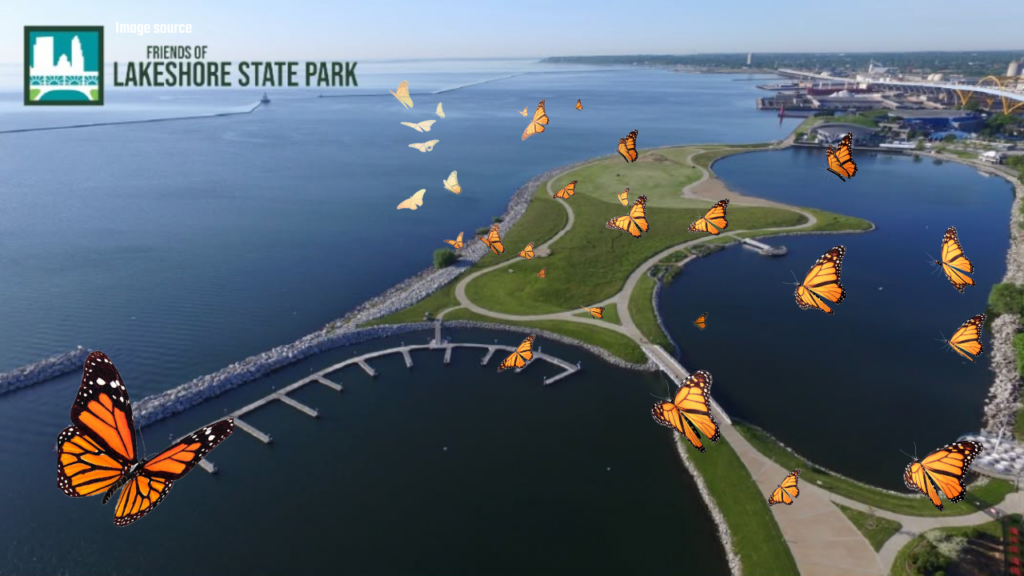
Want to have a real impact on thousands of little creatures? This Saturday, you can! The Monarch flyway planting is a huge initiative to restore natural habitats for monarch butterflies and promote urban diversity right here in Milwaukee. We know what you’re thinking… in a city? Yes! Our very own Lakeshore State Park is the perfect pit stop (and breeding ground) for monarchs on their long migratory journeys.
We were really interested in how this event came about and what makes Lakeshore State Park the perfect spot for a monarch flyway, so we reached out to the team behind the effort to learn more.
Hear what Eric Manges at Johnson Nursery had to say about the initiative below – oh, and they’re looking for volunteers from 10am-2pm to help with the planting. So get outside, get your hands dirty, and make a difference in our own backyard!
How did this monarch initiative come together? Who’s all involved?
It’s kind of a long story behind where the idea came from. It involved a lot of bourbon, my passion for restoration, and getting a large conservation event going that the public can get involved with. Johnson’s Nursery has the capacity not only to grow all the plants but also promote large scale initiatives like this. Rather than wait for someone to come to us for this idea, we’re just doing it ourselves. And thanks to our flyway partners we were able to cover the cost of the event, so it would be free to the public.
Is this your first year doing this, or have you hosted other collaborative plantings elsewhere in SE WI?
Johnson’s has created many pollinator gardens for groups throughout the region, but never on this scale. We often donate time, expertise, and sometimes plants to support different causes, though those projects are usually led by outside organizations with varying goals. Our vision is to make this an annual event that continues to grow each year, giving more people the opportunity to participate in conservation and witness the monarch migration firsthand.
What makes Lakeshore State Park a great spot for this flyway?
Lakeshore State Park is the perfect migratory stopover for wildlife. Its location along Lake Michigan creates a natural bottleneck that can concentrate wildlife in large numbers under the right conditions. Its proximity to a large population center and easy public access make it an ideal setting for an initiative like this.
What should people know about monarch populations in Wisconsin? Why is it so important to protect them and support their ecosystems?
Historically, Wisconsin has been a major summer breeding ground for monarchs. Their population grows exponentially from the first arrivals in mid May to the final generation that migrates south in late summer. Since the 1990s, monarch populations have declined dramatically, but widespread conservation efforts in Wisconsin can have a disproportionately large impact on their recovery by restoring the native plants monarchs depend on. Monarchs are a symbol of resilience, and their migration is one of the most remarkable in the natural world. They thrived long before us, and we now have the opportunity to help reverse the damage that contributed to their decline.
What can people expect when volunteering at the event? How many volunteers are you hoping will come out?
Volunteers will have the opportunity to get their hands dirty planting monarch-friendly native perennials. We will begin with opening remarks explaining why this work is so important and sharing ways people can support conservation at home. The holes will already be dug, so volunteers will simply need to remove the plants from their containers and make sure they are planted properly. Planting 2,000 one-gallon containers is no small task, so the more people who participate, the easier it will be. We are hoping for around 300 volunteers, but we would be thrilled to welcome even more.
Why is conservation in Wisconsin so important? What’s the benefit of urban biodiversity and utilizing public spaces for conservation efforts?
Over the last few hundred years, we have drastically changed our landscape through agriculture, development, and the introduction of invasive species. It is no surprise that many species in Wisconsin are now declining or facing the threat of extirpation without significant action. Projects like this help create habitat and increase the capacity for life in these spaces. While we cannot create more land, we can restore the native plant species that wildlife relies on for food and shelter.
It is important to continue advocating for strong management and investment in our public lands. Events like this are only the beginning. This project alone will not save monarchs overnight, but it can raise public awareness and inspire meaningful action instead of simply acknowledging the problem without addressing it.